

Talent Acquisition Intelligence
November 11, 2026
Meet your Program Faculty

MOHD. RAFIQUL ISLAM
Senior Program Faculty
Mohd. Rafiqul Islam is a distinguished Senior HR leader and Enterprise Transformation Consultant with over 27 years of experience in bridging the gap between people strategy and business outcomes. He is widely recognized for his expertise in Organizational Development (OD), KPI-driven Performance Management (Hoshin Kanri), and Compensation Architecture. Having worked across diverse sectors—including Pharmaceuticals, FMCG, Automobile Manufacturing, and Steel—hefocuses on integrating AI-enabled HR solutions to optimize workforce productivity and realize sustainable competitive advantage.
Education & Credentials
- MPHRM – University of Dhaka
- MBA (major in HR) – University of Science & Technology Chittagong (USTC)
- MSS Economics – University of Rajshahi
- Execution & Leadership – Harvard Business School
- Productivity & Innovation Management – Nanyang Polytechnic, Singapore
- Certified OD Professional (CODP) – CAP, UK
Areas of Expertise
- Strategic HR & Organizational Capability
- KPI-Driven Performance (Hoshin Kanri)
- Compensation Design & Reward Architecture
- AI-Enabled HR & Digital Transformation
Program Value Proposition
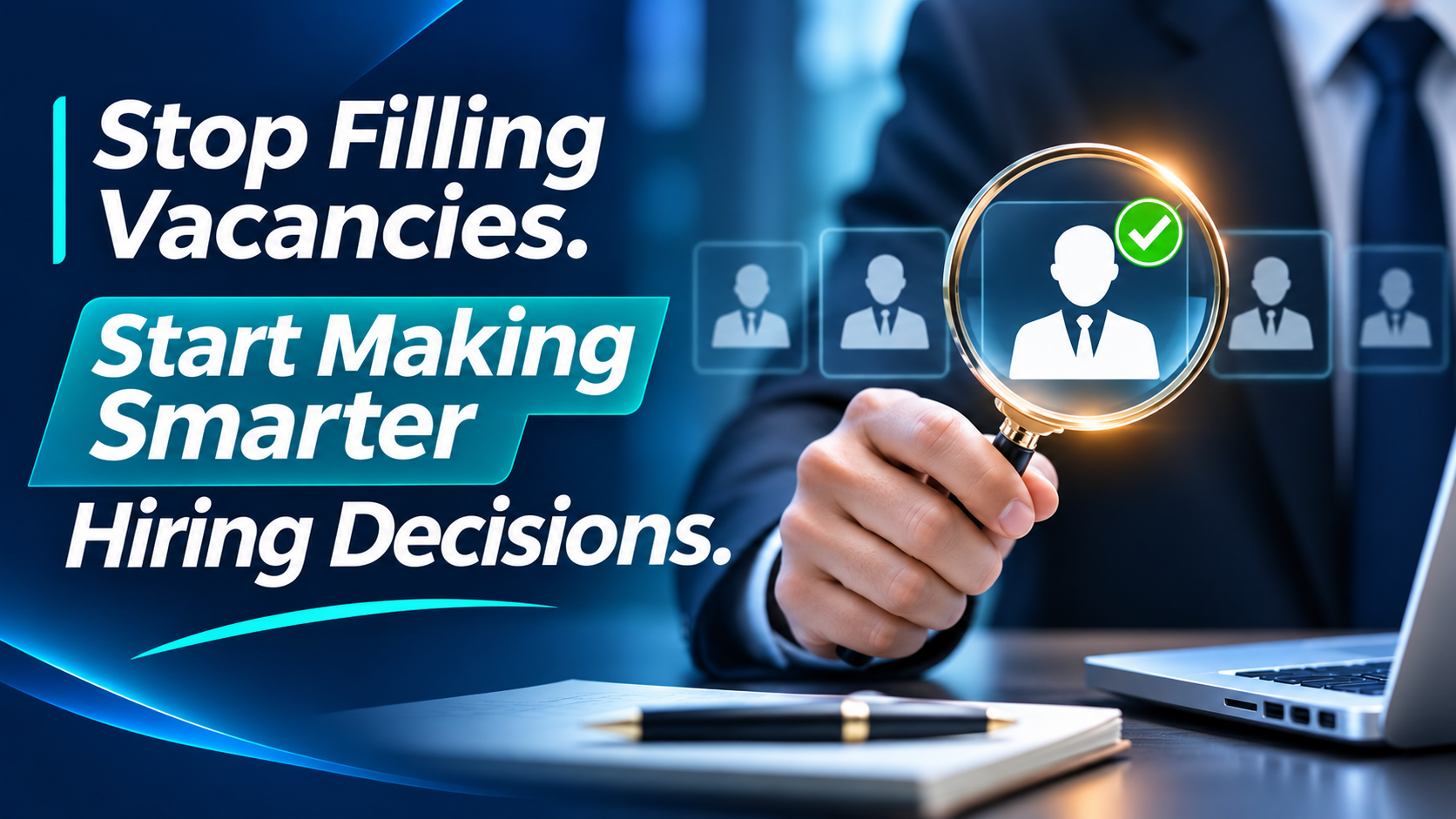
Move beyond vacancy filling to business-driven talent acquisition. This program equips HR professionals and hiring managers to identify genuine workforce needs, define what success looks like in a role, assess candidates against evidence, and select people with the capability to deliver organizational goals. Participants work through one integrated business case and apply practical tools at every stage of the hiring decision.
Program Architecture
A case-based, practitioner-focused learning journey across the complete talent acquisition cycle. Participants act as a Talent Acquisition Advisory Team, progressively diagnosing a business workforce challenge, defining the success profile for a critical role, evaluating candidate evidence, and defending a final hiring recommendation based on expected performance and business contribution.
Business-Driven Talent Acquisition & Workforce Needs Analysis
- Distinguish routine recruitment activities from strategic talent acquisition
- Translate business requirements into workforce and hiring needs
- Diagnose workforce gaps and identify their underlying causes
- Evaluate whether a vacancy requires replacement, additional headcount or an alternative solution
- Build a business-based hiring justification and assess the financial risk of a wrong hire
- Hiring Need Diagnosis: Analyze organizational targets, workforce capacity, performance gaps and a proposed manpower requisition. Decide whether recruitment is required, justify the hiring need and estimate the potential financial impact of a wrong hire.
- Deliverable: Business-Driven Hiring Justification Sheet.
Job Success Profiling, Competency Mapping & AI-Driven Candidate Intelligence
- Convert conventional job descriptions into outcome-oriented job success profiles
- Define measurable performance expectations for a specific role
- Identify and prioritize the competencies required for successful job performance
- Develop an ideal candidate profile aligned with business and job requirements
- Use AI to support candidate profiling while retaining human judgment and validation
- The Ideal Candidate Blueprint: Using the same case, define the outcomes the role must deliver, identify critical competencies, and build an ideal candidate profile. Use AI to help structure and test the profile against the business requirements.
- Deliverable: Job Success Profile & Ideal Candidate Blueprint.
Intelligent Talent Sourcing, Screening & Predictive Assessment
- Identify appropriate talent pools and select effective sourcing channels
- Apply AI-assisted techniques to screen, match and shortlist candidates
- Assess candidate capabilities against defined job success criteria
- Develop structured behavioral interview questions using the STAR method
- Evaluate candidate evidence objectively using competency-based scorecards
- Identify potential assessment bias and validate AI-supported recommendations
- Candidate Intelligence & Assessment Lab: Screen a set of contrasting candidate profiles, identify strengths and gaps, develop structured interview questions, assess evidence against the success profile and complete a candidate scorecard.
- Deliverable: Candidate Intelligence & Assessment Scorecard.
Strategic Selection, Hiring Decisions & Quality of Hire
- Compare shortlisted candidates using consistent, evidence-based criteria
- Evaluate candidate performance potential, job fit and associated hiring risks
- Estimate the time required for a new hire to achieve productivity and autonomy
- Assess the expected business contribution relative to the hiring investment
- Formulate and defend a strategic hiring recommendation
- Measure Quality of Hire and evaluate recruitment effectiveness
- Executive Hiring Decision Simulation: Compare shortlisted candidates, evaluate evidence and performance risks, estimate Time to Autonomy, and prepare and defend a final hiring recommendation based on expected business contribution.
- Deliverable: Evidence-Based Hiring Recommendation & Quality of Hire Measurement Sheet.
Program Outcomes
By the end of the program, participants will be able to:
- Diagnose hiring needs and justify recruitment decisions based on business requirements.
- Define job success profiles with measurable outcomes, key responsibilities, and required competencies.
- Apply intelligent sourcing and screening using AI-assisted tools and structured shortlisting.
- Assess candidates objectively through competency-based evaluation and structured behavioral interviews.
- Make evidence-based hiring decisions by evaluating candidate fit, risks, and potential contribution.
- Measure hiring success through time to productivity, time to autonomy, and Quality of Hire, while using AI responsibly.
Program Modality
- Interactive Learning: Faculty-led sessions with practical discussion and application.
- Integrated Business Case: One business case carried progressively through all four modules.
- Practical Diagnosis: Workforce gap analysis and business-based hiring justification.
- Hands-on Application: Job success profiling, competency mapping, and AI-assisted candidate screening.
- Simulation & Decision-Making: Structured interviews, candidate assessment, comparison, and hiring decisions.
Who should attend
- HR & Talent Leaders: HR Heads, HRBPs, and TA Specialists aiming to build predictive, business-aligned hiring systems.
- Hiring Managers & Business Heads: Functional leaders, Project Directors, and Operations Managers who want to stop making costly hiring mistakes and reduce ramp-up time for new team members.
Signature Talent Acquisition Intelligence Toolkit
Includes 14 Plug-and-Play Enterprise Templates & AI Prompt Blueprints.
Participants will receive and work with a practical toolkit of ready-to-use templates, worksheets, assessment tools, and AI prompt guides to apply the learning directly in their organizations.
The toolkit covers the complete talent acquisition journey—from diagnosing hiring needs and defining job success to candidate assessment, selection, and measuring hiring effectiveness.
- Business-Driven Manpower Requisition & Hiring Justification Sheet
- Workforce Gap & Hiring Needs Analysis Worksheet
- Job Success Profile & Performance Outcome Template
- Technical, Functional & Behavioral Competency Mapping Sheet
- AI-Assisted Ideal Candidate Profile & CV Matching Prompt Guide
- Talent Sourcing Channel Planner
- CV Screening & Candidate Shortlisting Matrix
- Competency-Based Interview Guide & STAR Question Bank
- Structured Candidate Assessment Scorecard
- Candidate Comparison & Evidence-Based Selection Matrix
- Time to Productivity & Time to Autonomy Estimator
- Hiring Decision & Business Contribution Recommendation Template
- Quality of Hire Measurement Sheet
- Recruitment Effectiveness KPI Sheet
Conclusion: From Vacancy Filling to Business-Driven Talent Decisions
Traditional recruitment asks:
“How quickly can we fill this vacancy?”
Strategic talent acquisition asks:
“What business result must this person deliver, what evidence shows they can deliver it, and how will we know the hiring decision was successful?”
This program develops a disciplined, evidence-based approach to talent acquisition. Participants learn to challenge hiring assumptions, define job success, assess capability rather than rely on impressions, and select candidates based on their potential to deliver measurable organizational outcomes. AI supports analysis and consistency; people remain accountable for fair, contextual, and defensible decisions.
From Vacancy Filling to Workforce Impact.
From Subjective Opinions to Evidence-Based Selection.
From Hiring Activity to Quality of Hire and Business Contribution.
Certification Awarded

Certification Requirements
To earn the Certificate of Completion, participants must actively participate in all four modules, contribute to the integrated business case, complete the required practical exercises, and present a reasoned final hiring recommendation. The recommendation must connect candidate evidence, job success requirements, estimated time to autonomy, and expected business contribution.